How Long Do Sewer Lines Last in Southaven, MS?
Published: 2026-10-10
A sewer line is the hardest-working pipe in your home and the one you think about least — until it fails. How long it lasts depends mostly on what it is made of, but in Southaven, local conditions like expansive clay soil, aggressive tree roots, and heavy spring rains can shorten a line's life well below the textbook numbers. Knowing your pipe material and its age is the closest thing to a crystal ball for predicting trouble.
This guide covers typical lifespans for each common sewer pipe material, the Southaven-specific factors that age lines faster, and how to find out what is actually buried under your yard before it becomes an emergency. If your home is more than 30 years old and you have never had the line inspected, a sewer camera inspection is the sensible first step — call (833) 713-2101 to arrange one.
Lifespan by Pipe Material
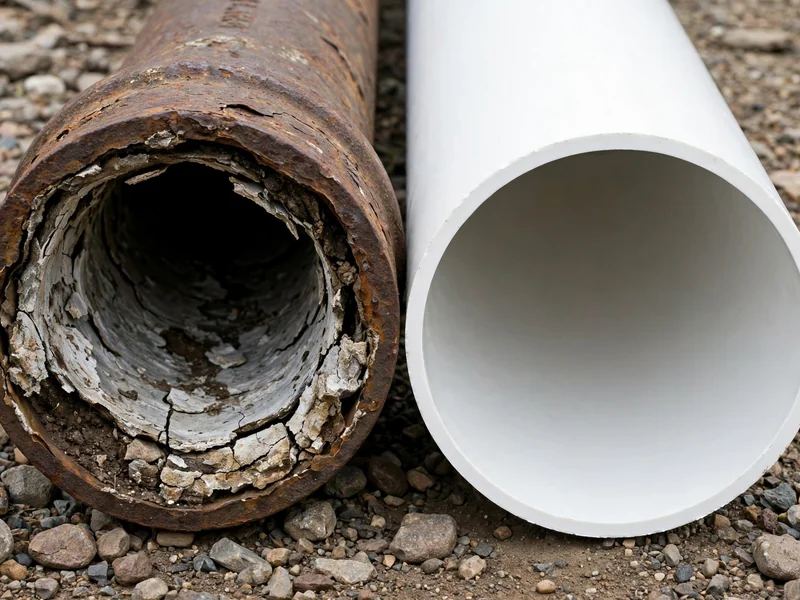
Clay (vitrified clay) pipe was the standard for much of the 20th century and is still under many older Southaven homes. Individual clay segments are extremely durable — the material itself can last a century — but the joints between segments are the weak point. Each joint is a mortar or rubber-gasketed seam that roots penetrate and clay soil shifts apart. A clay line's functional life is usually 50 to 80 years, and most failures are joint failures, not pipe failures.
Cast iron was common from the 1950s through the 1970s, especially for the interior-to-exterior transition. It is strong but corrodes from the inside out, developing scale and rust that narrow the pipe and eventually eat through the bottom. Expect 50 to 75 years in most soils, less where groundwater is aggressive. Orangeburg — a tar-impregnated fiber pipe used roughly from the 1940s to the 1970s — is the short-lived outlier: it deforms under soil pressure and typically fails within 30 to 50 years. If your home is from that era and has never had its line replaced, assume the clock is running out.
PVC and ABS plastic, the standard since the 1980s, are the longevity winners: chemically inert, joint-fused or gasketed, and essentially immune to corrosion and root entry at the joints. A properly installed PVC line should last 100 years or more. Newer Southaven subdivisions like Silo Square are all PVC — which is why sewer problems there are rare and usually caused by construction damage or misuse rather than age. High-density polyethylene (HDPE), used in pipe bursting installations, has a similarly long projected life.
What Shortens a Sewer Line's Life in Southaven
Expansive clay soil is the local accelerant. Southaven clay swells when wet and shrinks when dry, and that seasonal heaving works pipe joints apart year after year. Spring storms saturate the ground; summer heat bakes it. Each cycle stresses rigid materials like clay and cast iron a little more. Lines with bellies — low spots where the pipe has settled — collect solids and corrode faster, and bellies are more common in shifting clay.
Tree roots are the second accelerant, and Southaven's mature neighborhoods have plenty of large oaks, maples, and pines whose roots seek the moisture inside sewer lines. A root hair entering a joint in spring can become a woody mass within a few seasons, wedging the joint apart and cracking the pipe. Finally, misuse shortens any line's life regardless of material: grease poured down kitchen drains, so-called flushable wipes, and harsh chemical drain cleaners all damage pipes and create blockages that stress the system. A 40-year-old clay line with heavy root intrusion in Cherry Tree Park is living on borrowed time; a 40-year-old PVC line in the same soil might as well be new.
How to Find Out What You Have — and How Much Life Is Left
Start with your home's age. Built before 1980, you likely have clay, cast iron, or Orangeburg; built after 1990, almost certainly PVC. But age alone does not tell you condition — a 60-year-old clay line in stable soil with no nearby trees can outlast a 30-year-old line under a giant oak. The only way to know the real condition is a camera inspection, which shows cracks, offsets, root masses, bellies, and remaining wall thickness in plain video.
Watch for the early warnings that a line is nearing the end: drains that slow a little more each year, backups that recur after clearing, gurgling fixtures, sewage odors, or an unusually lush green stripe in the yard above the line. One backup is an incident; two in a year is a pattern, and patterns mean the pipe — not the blockage — is the problem. If the camera shows widespread joint failure, multiple offsets, or a line that is more patch than pipe, sewer line replacement (trenchless or conventional) is usually more sensible than another clearing. A line at the end of its life will keep billing you in emergency visits until it is replaced.
Extending the Life You Have Left
You cannot change your pipe's material or age, but you can slow its decline. Keep roots under control: if large trees stand near your line, periodic root cutting or a maintenance plan with scheduled cleanings prevents small intrusions from becoming pipe-splitting masses. Never pour grease down drains, never flush wipes (even the ones labeled flushable), and avoid chemical drain cleaners that corrode cast iron and kill the beneficial bacteria in septic-adjacent systems.
Schedule a camera inspection every few years once a line passes 30, and annually if you have already had root or backup problems — think of it as the equivalent of a roof inspection. And pay attention to the seasons: Southaven's spring storms are when marginal lines fail, because infiltrating rainwater overwhelms already-restricted pipes. If your drains slow every April, do not wait for the backup to schedule the inspection. A line with years of life left can be protected; a line at the end needs a replacement plan before it chooses the timing for you.
Frequently Asked Questions
My house was built in the 1970s. Should I assume my sewer line is failing?
Not necessarily, but you should assume it deserves an inspection. 1970s homes typically have clay, cast iron, or Orangeburg lines — all past or approaching the end of their functional lives. A camera inspection will show whether yours is aging gracefully or is one storm away from failure. Many 1970s lines are still serviceable with maintenance; some are emergencies waiting for spring rain.
Does PVC pipe ever need replacement?
Rarely due to age — PVC is rated for a century or more. PVC lines fail from installation defects (bad slope, poor bedding in rocky or shifting soil), construction damage (a fence post or landscaping crew piercing the line), or severe ground movement. If a PVC line is backing up, the cause is usually a blockage or a break from outside force, and a camera inspection will identify it quickly.
Can tree roots really destroy a sewer line?
Yes. Roots enter through tiny joint gaps seeking moisture, then expand as they grow — wedging joints apart, cracking clay segments, and eventually filling the pipe with a woody mass that blocks flow entirely. In Southaven's clay soil, the cycle is accelerated because soil movement opens joints for roots to exploit. Once roots have cracked the pipe structurally, clearing them is temporary; the pipe needs lining or replacement.
How often should an older sewer line be inspected?
For lines over 30 years old, a camera inspection every two to three years is reasonable; annually if you have had backups, root intrusions, or known bellies. Inspections are inexpensive compared to emergency backups, and they let you plan a replacement on your schedule instead of reacting to a crisis. Spring, before storm season, is the ideal timing in Southaven.
Is it worth replacing a line that still works?
If the camera shows widespread deterioration — multiple failed joints, offsets, or a line kept alive by frequent cleanings — proactive replacement is usually cheaper than the cumulative cost of emergency visits, water damage, and landscaping repairs from repeated backups. It also lets you choose trenchless methods on your timeline. If the line is sound with isolated issues, targeted repair plus maintenance is the better value.