Pipe Bursting in Southaven, MS: How the Method Works
Published: 2026-10-10
Pipe bursting is a trenchless method that replaces a damaged sewer line with a brand-new pipe — without digging a continuous trench. A powerful bursting head is pulled through the old line, fracturing it outward into the surrounding soil, while a new high-density polyethylene (HDPE) pipe is drawn in right behind it. The old pipe is gone; a new, larger-capacity pipe takes its place.
Homeowners in Southaven usually encounter pipe bursting as one of two trenchless options, the other being pipe lining. Bursting is the right choice when the old line is too far gone to line — collapsed sections, severely deformed pipe, or a line you want to upsize. This guide explains the equipment, the step-by-step process, and how Southaven's clay soil and mature neighborhoods factor into the decision.
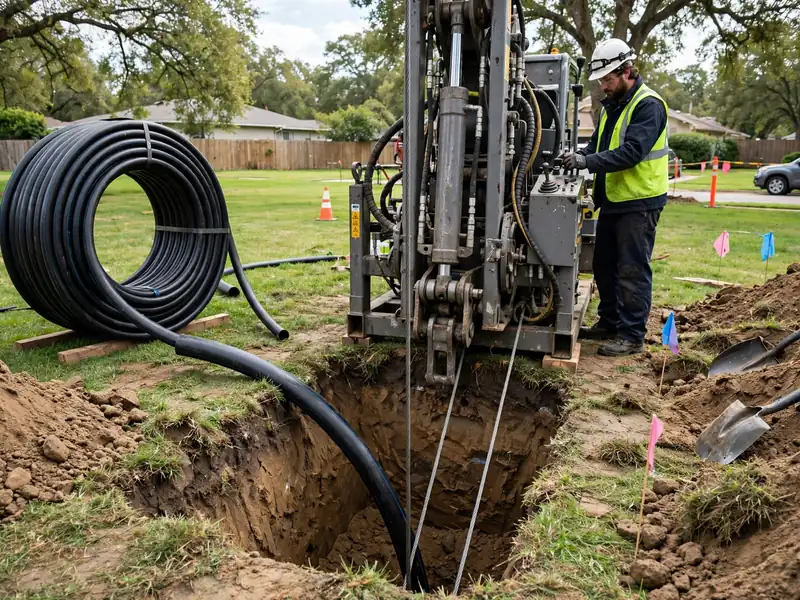
The Equipment: Bursting Head, Cable, and New Pipe
The bursting head is a cone-shaped steel tool, slightly larger in diameter than the new pipe. It is attached to a winch cable or hydraulic pulling rod at the exit pit and to the new HDPE pipe at its trailing end. As the winch pulls, the head's leading edge splits and displaces the old pipe — clay shatters, cast iron fractures, Orangeburg crumbles — pushing the fragments outward into the soil while the new pipe slides into the freshly opened path.
The replacement pipe is HDPE: fused into one continuous, jointless run with no seams for roots to enter. HDPE is flexible enough to follow gentle curves, strong enough to resist soil loads, and rated for a very long service life. Because the bursting head is larger than the new pipe, the new pipe can also be upsized — for example, replacing a 4-inch clay line with a 6-inch HDPE line — which is useful when the original pipe was undersized for the home's fixtures. A sewer camera inspection beforehand confirms the old pipe's diameter, material, and depth so the crew sizes everything correctly.
The Pipe Bursting Process Step by Step
Step one is the camera inspection and planning. The technician maps the line's route, depth, and condition, locates the connection to the municipal main, and identifies any nearby utilities — gas, electric, water — that must be avoided. In Southaven's established neighborhoods, laterals often run under driveways and mature landscaping, which is precisely why bursting is attractive: the plan needs only two small pits, an entry and an exit, instead of an open trench.
Step two is digging the access pits. A small pit is excavated at each end of the run — typically at the house foundation and near the street or main connection. These pits are a fraction of the excavation a conventional replacement requires, and they are the only ground that gets disturbed. Step three is the pull itself. The cable is threaded through the old pipe, the bursting head and new HDPE are attached, and the winch draws the assembly through. The crew monitors pulling force continuously; a sudden spike can indicate an obstruction like a concrete encasement or an unexpected utility crossing.
Step four is connection and testing. The new pipe is connected to the house plumbing at one end and the municipal main at the other, branch connections are reattached, and the line is camera-inspected and flow-tested. Step five is restoration: the two pits are backfilled, compacted, and restored. Most residential bursting jobs are completed in a day or two, and the yard shows two patches instead of a trench scar.
How Southaven's Soil and Neighborhoods Affect Bursting
Southaven's clay soil is actually favorable for pipe bursting in one respect: it is cohesive enough to hold the expanded cavity open while the new pipe is drawn through, unlike loose sandy soils that can collapse back. But the same clay causes the pipe failures that make bursting necessary — seasonal swelling and shrinking that cracks clay segments and offsets joints. Older subdivisions like Greenbrook and Rasco Farms, with 1970s- and 1980s-era clay and cast iron laterals, are prime candidates: the old material bursts cleanly and the new HDPE line is immune to the joint failures that doomed its predecessor.
Seasonal timing matters too. Bursting in waterlogged spring soil is harder — groundwater filling the pits and the pipe path complicates the pull — so late summer through fall is often the preferred window in northern Mississippi. Winter freeze snaps are less of a factor for bursting than for lining, since there is no resin to cure, but frozen ground makes pit excavation slower. One more local note: Southaven's mature tree roots can wrap old lines so thoroughly that the bursting head has to work through a root-and-pipe composite. Experienced crews cut roots first with the camera-verified cleaning pass, so the pull meets pipe, not a woody straitjacket.
When Bursting Is the Right Call — and When It Isn't
Bursting shines when the old pipe cannot be lined: collapsed sections, missing segments, severely deformed Orangeburg, or a line with bellies and wrong slope that a liner would only copy. It is also the answer when you want a larger pipe — lining cannot increase diameter, but bursting can. And when the line runs under a new driveway, a pool, or irreplaceable landscaping, bursting's two-pit footprint beats an open trench by a wide margin.
Bursting is not universal. It cannot be used where the pipe path passes too close to other utilities that could be damaged by the outward displacement, or where the soil contains large rocks or concrete encasement that the head cannot displace. Extremely shallow lines may not have enough soil cover to contain the bursting forces. And if the old line has severe bellies caused by settled soil, bursting alone does not fix the soil — the new pipe needs proper bedding and compaction to avoid developing the same sag. A trenchless sewer repair specialist should walk you through both bursting and lining after the camera inspection, and recommend the method your line actually qualifies for — not the one that is most convenient to sell. To discuss which trenchless option fits your situation, call (833) 713-2101.
Frequently Asked Questions
Does pipe bursting damage the yard?
Far less than conventional excavation. Bursting requires only two small pits — one at each end of the run — instead of an open trench along the entire line. Lawns, driveways, patios, and landscaping between the pits stay intact. The pits themselves are backfilled and restored, leaving two patches that heal quickly compared to a full trench scar.
Can pipe bursting increase my pipe size?
Yes — that is one of its advantages over pipe lining. Because the bursting head is larger than the new pipe, the replacement HDPE line can be upsized, for example from 4 inches to 6 inches. Upsizing helps when the original line was undersized for the home's fixtures or when you want extra capacity. Lining, by contrast, slightly reduces the inside diameter.
What happens to the old pipe?
It is fractured outward into the surrounding soil by the bursting head and stays there as inert fragments. Clay shatters, cast iron breaks apart, and Orangeburg crumbles — none of it needs to be hauled away. The fragments are well below the surface and do not affect the new pipe, which is drawn into the path immediately behind the head.
How long does a pipe bursting job take?
Most residential bursting projects in Southaven are completed in one to two days: inspection and pit excavation, the pull itself, connections, testing, and backfill. Complex runs — very long laterals, deep pipes, or difficult utility crossings — can take longer. Your contractor should give you a written timeline after the camera inspection, before work begins.
Will my plumbing work during pipe bursting?
Not while the line is being replaced. Once the old pipe is disconnected and the new pipe is being pulled, no water can go down your drains. The outage is typically limited to the workday or days of the pull itself. Your contractor should tell you the expected no-use window in advance so you can plan around it.