Sewer Camera Inspection in Southaven, MS: What to Expect
Published: 2026-10-10
A sewer camera inspection is exactly what it sounds like: a waterproof, high-resolution camera on the end of a flexible cable, fed through your sewer line to show its condition in real time. It is the single most informative diagnostic in the sewer trade — the difference between guessing at a problem and seeing it. For Southaven homeowners, it is how you find out whether that slow drain is a minor clog or a cracked line full of tree roots.
This guide walks through the full process: how to prepare, what the technician does step by step, what the camera typically finds in DeSoto County lines, and how to read the results so you can make decisions with confidence. If you are buying a home, dealing with repeat backups, or planning any sewer repair, start here — call (833) 713-2101 to schedule an inspection.
Before the Technician Arrives: How to Prepare
The main thing the technician needs is access to your sewer line, which usually means the main cleanout — a capped pipe, typically 3 to 4 inches in diameter, located outside near the foundation, in a basement or crawlspace, or sometimes in the yard. Make sure it is accessible: move stored items, unlock gates, and clear vegetation around an outdoor cleanout. If you do not know where your cleanout is, mention it when you call; the technician can often locate it, and in some cases the camera can be run through a removed toilet as a last resort.
It helps to know your home's history. Tell the technician the home's age, any previous sewer work or backups, the location of large trees near the line, and whether problems worsen after rain — in Southaven, rain-correlated slowdowns are a classic sign of infiltration through cracked joints. Reduce water use for an hour or so before the visit so the line is not surging, and keep pets and kids clear of the work area. There is no digging involved in a standard inspection, so your yard stays intact.
The Inspection Process Step by Step
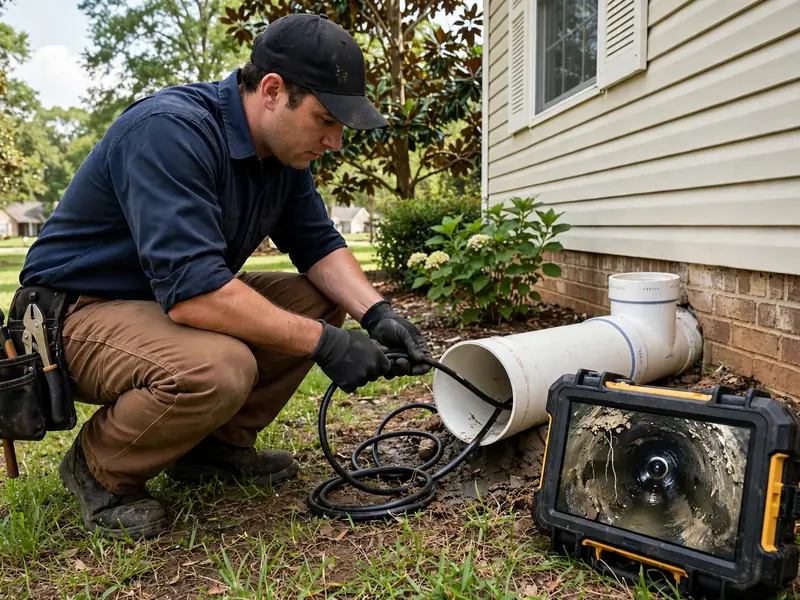
The technician starts by opening the cleanout and often running a preliminary clearing pass if the line is heavily blocked — a camera cannot see through a solid clog, so severe blockages may need cabling first. Then the camera head, about the size of a golf ball, goes in on a push cable marked with footage counters. You watch the live feed on the technician's monitor as the camera travels from your house toward the municipal main, sometimes 50 to 100 feet or more.
As the camera moves, the technician narrates what appears: pipe material changes, joints, cracks, root intrusions, bellies where water pools, offsets where segments have shifted, and the connection at the city main. A locating sonde in the camera head lets the technician pinpoint the camera's position and depth from above ground with a receiver — so when the video shows a break at 63 feet, they can mark the exact spot in your yard with paint. The full run is recorded, and you should receive a copy of the video plus a written summary noting each defect by footage and depth. A typical residential inspection takes well under an hour of camera time, though heavily blocked lines take longer.
What the Camera Usually Finds in Southaven Lines
In Southaven's older subdivisions — Greenbrook, Rasco Farms, and other 1970s- and 1980s-era neighborhoods — the camera most often finds clay pipe with root intrusion at the joints, exactly what you would expect from vitrified clay in expansive soil. Roots appear as fibrous white or brown masses; small ones look like hair, advanced ones like woody nests that fill the pipe. Cracked and offset segments are common where clay soil has heaved, and bellies show up as sections where the camera sits in standing water instead of gliding through a dry pipe.
Cast iron lines show a different signature: internal scaling and rust that narrow the pipe, sometimes called tuberculation, and eventually thin spots or holes in the pipe bottom. In newer PVC neighborhoods like Silo Square, the camera usually finds a clean line — problems there tend to be construction damage, a crushed section from heavy equipment, or misuse like grease and wipes. Spring inspections often reveal infiltration: groundwater visibly seeping into the pipe through cracks during or after rain, which explains why drains slow every April. Whatever the camera finds, the footage is your evidence — it is what justifies a repair recommendation and what lets you get comparable quotes.
Reading Your Results and Deciding Next Steps
A good inspection report gives you three things: the video, a written defect log with footage markers, and a plain-language recommendation. Minor findings — light root hairs at one joint, a small crack with no displacement — usually mean maintenance: scheduled root cutting or cleaning, and re-inspection in a year or two. Moderate findings — multiple root intrusions, a belly, an offset segment — mean a targeted repair or trenchless fix like pipe lining should be planned before the next storm season.
Severe findings — collapse, missing sections, a line that is more break than pipe — mean replacement, trenchless or conventional, and the footage is what lets contractors quote accurately instead of padding for unknowns. If you are buying a home, get the inspection before closing: a failed lateral is a five-figure negotiation point, and sellers in Southaven's older neighborhoods know it. And if a contractor recommends a major repair without showing you camera footage first, that is your cue to get a second opinion — from a company that will put a camera in the ground and show you what it sees. Call (833) 713-2101 and ask for the video copy with your report.
Frequently Asked Questions
How much does a sewer camera inspection cost?
Pricing varies by market and by how the inspection is bundled — many companies apply the inspection fee toward repair work if you proceed with them. What matters more than the fee is what you receive: insist on a full video copy and a written defect log with footage markers, not just a verbal summary. A cheap inspection that produces no usable record is no bargain when you need a second quote.
Can the camera inspect the entire line to the street?
Usually yes. The camera runs from your cleanout through the lateral to the municipal main, which covers the full length you are responsible for. If there is no accessible cleanout, the technician may pull a toilet to gain access. Extremely long commercial runs or lines with sharp, damaged bends can limit reach, but for most Southaven homes the full run is inspectable.
Will the inspection damage my pipes?
No. The camera head is small, smooth, and designed to glide through pipes without catching or scraping. If the line is heavily blocked, the technician may run a cutter or jetter first to clear a path — that cleaning is standard practice and is gentler than the blockage it removes. The inspection itself is entirely non-invasive: no digging, no disassembly beyond opening the cleanout.
Should I get a camera inspection before buying a home?
Yes — it is one of the highest-value inspections in a real estate transaction, especially for Southaven homes built before 1990. A standard home inspection does not include the sewer lateral, and a failed line is an expensive surprise after closing. The video gives you documented leverage to negotiate repairs or a credit with the seller.
How often should I have my sewer line inspected?
For lines over 30 years old, every two to three years; annually if you have had backups, root problems, or known bellies. After any major repair — lining, bursting, or replacement — get a post-repair inspection on video as your baseline record. In Southaven, scheduling inspections in late winter or early spring, before storm season, catches infiltration problems before the rains arrive.