Sewer Line Cleaning vs. Hydro Jetting in Southaven, MS
Published: 2026-10-10
When a sewer line slows down or backs up, the first question is how to clear it — and the two main answers are mechanical cleaning (cabling or snaking) and hydro jetting (high-pressure water). They are not interchangeable: each excels at different blockages, carries different risks, and costs the project differently. Choosing wrong means either an incomplete clearing or unnecessary wear on your pipes.
This guide compares the two methods head to head: how each works, what each does well, where each falls short, and which one Southaven's common problems — grease, tree roots, and scale in aging lines — actually call for. If your line needs clearing now, call (833) 713-2101 and describe the symptoms; the right method starts with the right diagnosis.
Mechanical Cleaning: How Cabling Works
Mechanical cleaning feeds a flexible steel cable with a cutting head into the line. The cable rotates, and the head — a blade, a boring tip, or a root-cutting attachment chosen for the blockage — chews through the obstruction. It is the traditional drain snake scaled up for main lines, and it is effective at punching through solid blockages: compacted wipes, dense root masses, and foreign objects. For a line that is fully blocked and needs flow restored fast, cabling is often the first tool out of the truck.
Cabling's strength is also its limitation. A spinning blade cuts a path through the blockage, but it does not clean the pipe walls — grease smeared along the walls, scale coating cast iron, and sludge in bellies all remain. Think of it as drilling a hole through a clog rather than cleaning the pipe. It is also the method most likely to damage fragile pipe: an aggressive cutter in a deteriorated clay or Orangeburg line can break through the pipe wall itself, turning a cleaning into a repair. That is why a sewer camera inspection should precede aggressive cabling on older lines — you need to know the pipe can take it.
Hydro Jetting: How High-Pressure Water Works
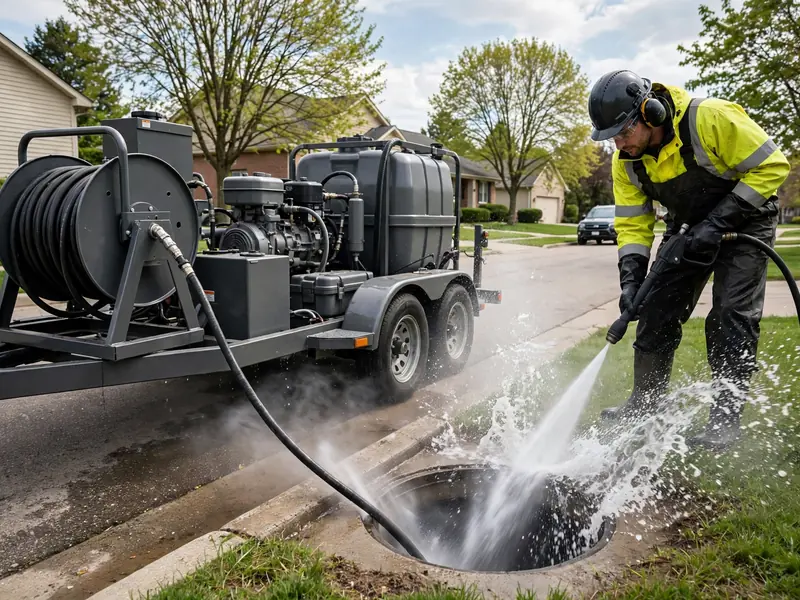
Hydro jetting sends water through the line at pressures from 1,500 to 4,000+ PSI through a specialized nozzle that directs jets both forward and backward. The forward jets break up the blockage; the rear jets propel the nozzle forward and scour the pipe walls clean as it retreats. The result is not just an open path but a pipe restored close to its original inside diameter — grease, scale, sludge, and fine root hairs washed away, not just pierced.
Jetting is the superior cleaner for the blockages Southaven lines suffer most. Grease — the number one cause of slow commercial and residential kitchen lines — dissolves and flushes under hot high-pressure water in a way no blade can match. Scale inside aging cast iron, which narrows the pipe year by year, is scoured off. Sludge settled in bellies is liquefied and carried out. For root intrusion, jetting with a root-cutting nozzle clears the mass thoroughly, though it does not seal the joint the roots entered through — that still needs root treatment or repair. Jetting's main requirement is a pipe intact enough to contain the pressure; a collapsed or badly broken line is not a jetting candidate.
Head-to-Head: Which Wins for Common Southaven Problems
Grease blockages: hydro jetting, decisively. Cabling punches a hole that grease re-closes within weeks; jetting strips the walls and restores full diameter. Any Southaven restaurant or home with recurring kitchen-line slowdowns should be jetting, not cabling. Root intrusion: it depends. Light to moderate roots — jetting clears them completely and inspects cleanly afterward. A massive woody root ball fully blocking the line — cabling first to open a path, then jetting to finish the cleaning. Either way, the roots will return unless the entry joints are sealed by lining or repair.
Scale and sludge in old cast iron or bellied clay: jetting, which is the only method that actually removes wall deposits. Fully blocked line needing immediate flow: cabling, for speed — then a camera inspection to see what the blockage was hiding. Fragile, deteriorated pipe: neither aggressively; a camera inspection first, gentle clearing, and an honest conversation about repair, because blasting a crumbling Orangeburg line can finish what age started. Cost and equipment differ too — jetting requires a jetter truck and more setup — but the comparison that matters is effectiveness per visit: a line properly jetted stays clear far longer than a line merely cabled.
What a Proper Cleaning Visit Looks Like
It starts with diagnosis, not equipment. The technician should ask about symptoms, check which fixtures are affected, and — for anything beyond a simple fixture clog — run a camera to see what is actually in the line. Cleaning blind is how pipes get damaged and blockages get half-cleared. The method is then matched to what the camera shows: jetting for grease and scale, cutting heads for solid root masses, gentle approaches for fragile pipe.
After clearing, the camera goes back in. This post-cleaning inspection is the step that separates professional sewer line cleaning from a quick snake-and-go: it verifies the line is actually clear, reveals the underlying condition (cracks, offsets, bellies the blockage was hiding), and produces the video record you need to decide on next steps. If the camera shows a damaged pipe, no amount of cleaning — jetting or cabling — is a permanent fix, and the technician should say so plainly and discuss repair options. Cleaning restores flow; only repair restores the pipe. Call (833) 713-2101 to schedule a camera-verified cleaning.
Frequently Asked Questions
Is hydro jetting safe for old pipes?
It depends on the pipe's condition, which is why a camera inspection comes first. Sound clay, cast iron, and PVC handle jetting pressures fine — technicians adjust pressure to the pipe material and condition. Badly deteriorated, collapsed, or missing-section pipe should not be jetted; the pressure can worsen the damage. A reputable technician will show you the camera footage and explain the pressure choice before starting.
How long does hydro jetting last compared to snaking?
Considerably longer for the blockages jetting is designed for. Because jetting cleans the full pipe wall rather than just piercing the clog, grease and scale take much longer to rebuild. A cabled grease line can slow again within weeks; a jetted line typically stays clear for a year or more depending on use. For root intrusion, neither is permanent — roots regrow through unsealed joints regardless of method.
Can hydro jetting remove tree roots?
Yes, with root-cutting nozzles, jetting clears root masses thoroughly — often more completely than mechanical cutters, since it flushes the debris out instead of leaving cuttings behind. But jetting does not seal the cracked joint or gap the roots entered through. Expect roots to return within a year or two unless the entry point is repaired by lining or replacement.
Why does my line keep clogging after professional cleaning?
Recurring clogs after cleaning point to a pipe problem, not a cleaning problem: a belly holding sludge, an offset joint catching debris, root re-entry, or a line with the wrong slope. If the same line needs clearing more than once a year, stop paying for cleanings and get a camera inspection — the footage will show the structural issue that cleaning cannot fix.
Should I try chemical drain cleaner before calling?
For main sewer lines, no. Chemical cleaners rarely clear main-line blockages, they can damage cast iron and older pipes, they create a chemical hazard for the technician who eventually works on the line, and they do nothing for roots, bellies, or breaks. If more than one fixture is affected, skip the chemicals and call for professional diagnosis.