Sewer Odor in Your Yard or Home: A Southaven, MS Guide
Published: 2026-10-10
Few things ruin a quiet evening like the smell of sewage — whether it drifts across the backyard on a summer night or seeps from a bathroom drain. Sewer odor is never normal, and it is always telling you something: a dry trap, a failed seal, a broken vent, or a damaged line underground. The location of the smell is your first and most telling diagnostic clue.
This guide helps you read that clue: what yard odors mean versus indoor odors, the most common causes of each in Southaven homes, how professionals track the source, and what fixes actually work. If the odor is strong, persistent, or comes with headaches or nausea, prioritize safety first — ventilate and leave the area — then call (833) 713-2101 for diagnosis.
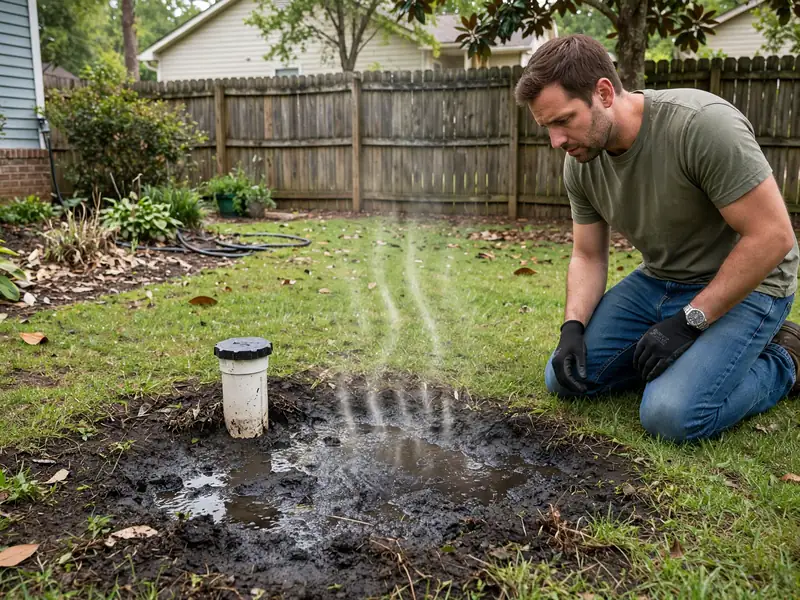
Yard Odors: What They Mean
A sewage smell outdoors, especially near the sewer line's route or around the cleanout, usually means sewage or sewer gas is escaping underground. The common causes: a cracked or separated pipe joint leaking into the soil, a broken cleanout cap, a saturated drain field (for septic systems), or a manhole or vent issue near the property. Southaven's clay soil plays a role here — it holds moisture and odor, so a small leak can produce a disproportionately strong smell, and seasonal heaving cracks joints open wider each year.
Note when the odor appears. Strongest after rain? That points to infiltration and exfiltration through cracked joints — stormwater entering the line raises its level and pushes gas out through the same cracks. Strongest in summer heat? Warmth accelerates decomposition and volatilizes gases, making a marginal leak obvious in July that was undetectable in January. A yard odor that is constant and worsening means an active, growing leak — the kind that also attracts tree roots, which will widen the damage. Yard odors merit a camera inspection to locate the break; guessing at the location and digging is the expensive way to find it.
Indoor Odors: Room-by-Room Diagnosis
Indoor sewer odor has a shorter suspect list, and you can narrow it yourself. Bathroom odors: check the toilet first — a rocking toilet or one with a failed wax ring lets gas escape around the base. Then run water in the shower, tub, and sink to refill traps; an unused guest bathroom's traps evaporate dry in weeks during Southaven summers. Kitchen odors: the garbage disposal and dishwasher drain are prime suspects — food debris rotting in a disposal or a dry dishwasher air gap produces a convincing sewage imitation. Clean the disposal with ice and citrus, run the dishwasher, and see if the smell clears.
Laundry room and basement odors: floor drains are the usual culprit — their traps dry out fastest because they are rarely used. Pour a bucket of water into every floor drain monthly. If odors come from multiple rooms at once, or from drains that are used daily, the problem is systemic: a cracked or blocked vent stack (often in the attic, sometimes damaged by roof work or storms), a dry whole-house trap, or a main line issue pushing gas back through the system. Vent problems often announce themselves with gurgling drains alongside the odor — the system's pressure relief is compromised.
How Professionals Find the Source
When DIY diagnosis stalls, professionals have purpose-built tools. A smoke test blows harmless theatrical smoke through the plumbing system; the smoke escapes through the same openings sewer gas uses — cracked vents, failed wax rings, broken pipes — making the leak visible. It is the fastest way to find an indoor gas leak when the drains themselves look fine. For suspected underground damage, the camera inspection shows cracks, separations, and breaks directly, with a locator marking the spot from above ground.
In Southaven, the diagnostic pattern is familiar: summer brings dry-trap and disposal odors (heat accelerates both evaporation and decomposition), spring brings infiltration-driven yard odors after storms, and year-round, the older clay laterals in 1970s-era subdivisions produce the slow-developing joint failures that smell worse each season. A good diagnostician asks about timing — when the odor started, when it is worst, what the weather was — because the pattern often identifies the cause before any equipment comes out. Describe your odor's pattern when you call; it focuses the diagnosis and saves you the cost of testing the wrong thing.
Fixes That Actually Work
Match the fix to the cause. Dry traps: run water regularly, and for rarely used drains, a tablespoon of mineral oil on top of the trap water slows evaporation dramatically. Failed wax ring: reset the toilet with a new ring — a straightforward repair that permanently ends base-of-toilet odors. Disposal and dishwasher smells: clean the disposal, run hot water, and check the dishwasher drain loop. Cracked or blocked vents: repair or clear the vent — this is professional work, especially for vents inside walls or on steep roofs.
Damaged underground lines need leak detection followed by repair: spot repair, pipe lining, or bursting depending on the damage. What does not work: air fresheners and drain deodorizers (they mask the symptom while the cause worsens), pouring bleach down drains (it kills trap-seal biology and does nothing for a cracked vent), and ignoring it (sewer odors never resolve themselves — the underlying failure only grows). An odor is information. Use it: find the source, fix it properly, and the smell — and whatever is causing it — goes away for good. Call (833) 713-2101 to track down a persistent sewer odor.
Frequently Asked Questions
Why does my house smell like sewer only sometimes?
Intermittent odors usually track to intermittent causes: traps that dry out between uses, odors that appear when the wind blows a certain direction across a roof vent, or rain pushing gas through cracked joints. Note the pattern — time of day, weather, which fixtures were just used. The pattern is the diagnostician's most useful clue, so keep a simple log for a week before calling.
Can a clogged vent cause sewer smell?
Yes — a blocked or cracked vent stack is a classic cause of whole-house sewer odor, often with gurgling drains. The vent equalizes pressure and gives sewer gas a safe outdoor exit; when it fails, gas takes the path of least resistance — your drains. Vents get blocked by debris, nests, or ice, and cracked by age, storms, or roof work. Vent diagnosis and repair is professional work.
Is it safe to stay in a house that smells like sewage?
A faint, localized odor from a dry trap is a plumbing nuisance, not an emergency — refill the trap and monitor. A strong, widespread odor, especially with headache, nausea, dizziness, or eye irritation, means leaving the area and getting fresh air; hydrogen sulfide at higher concentrations is hazardous, and methane is flammable. When in doubt, leave first and diagnose second.
Why does the sewer smell get worse in summer?
Heat accelerates the bacterial decomposition that produces sewer gas, and it evaporates trap water faster — so marginal problems become obvious in July. Southaven's long hot summers make dry traps and disposal odors a seasonal ritual. Monthly water in unused drains and regular disposal cleaning prevent most of it.
My yard smells but my drains work fine. Should I worry?
Yes — a yard-only odor with normal drainage usually means an underground leak that has not yet restricted flow: a cracked joint or separated connection venting gas into the soil. It will not fix itself, it attracts roots that worsen the damage, and it can contaminate soil. A camera inspection locates the break so it can be repaired before it becomes a backup or a sinkhole.