What to Do When Your Sewer Backs Up: A Southaven, MS Action Plan
Published: 2026-10-10
Sewage coming up through your drains is a crisis that rewards fast, correct action and punishes hesitation. Every minute of continued water use makes the backup worse; every wrong move — plunging the wrong fixture, wading in unprotected — adds risk. This is the action plan to follow from the moment you discover the backup, in order, so you protect your health, limit the damage, and set up the repair and any insurance claim correctly.
If sewage is actively entering your home right now, start with step one below and call (833) 713-2101 for emergency sewer service — then keep reading while help is on the way.
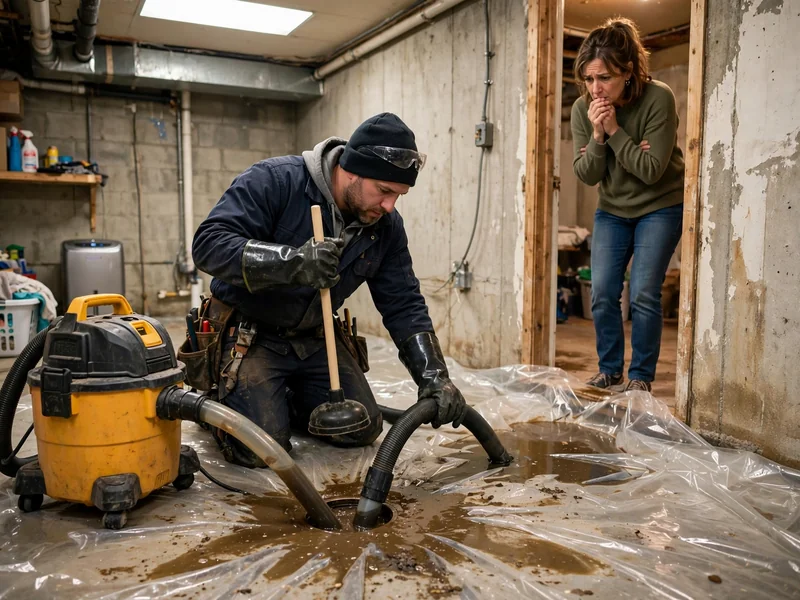
Immediate Steps: Stop the Flow and Stay Safe
Step one: stop all water use in the house, immediately. No flushing, no showers, no laundry, no dishwasher, no running taps. Every gallon that goes down a drain flows into a line that cannot empty — and comes back up through the lowest fixture. Tell everyone in the house. This single action does more to limit damage than anything else you can do, and it costs nothing.
Step two: protect people and pets. Sewage carries bacteria, viruses, and parasites — keep children, pets, and anyone with health vulnerabilities completely away from affected areas. Do not wade through standing wastewater without protection; if you must enter the area, wear waterproof boots and gloves, and wash thoroughly afterward. Step three: cut the power to affected areas if water is near outlets, appliances, or the electrical panel — water and electricity is a combination that kills. If you are unsure, call the fire department's non-emergency line for guidance before entering a flooded basement. Step four: ventilate. Open windows in affected areas if weather permits — it reduces odor and airborne contaminants while you wait.
What Not to Do During a Backup
Do not keep using plumbing 'just a little' — there is no safe amount of water use during a main-line backup. Do not plunge or snake the main line yourself: plunging a main-line blockage can force sewage up through other fixtures, and a consumer snake in a damaged line can worsen the break or get stuck, converting your problem into the technician's extraction project. Do not pour chemical drain cleaners into a backed-up system — they will sit in the standing sewage, creating a chemical hazard for anyone who works on the line, without clearing a main-line obstruction.
Do not ignore a backup that seems to resolve on its own. A backup that drains away after the rain stops or after water use pauses has not fixed itself — the blockage or break remains, and the next trigger brings it back worse. And do not start throwing away damaged belongings before documenting them: photograph and video everything first (more on that below), because undocumented losses are unclaimable losses. The theme of this section is restraint: during the crisis, your job is containment and documentation, not repair. Leave the repair to the professionals with the camera and the equipment.
Document Everything for Repair and Insurance
Before any cleanup begins, document the scene thoroughly. Photograph and video every affected room: the waterlines on walls, the affected flooring, damaged furniture and belongings, and the source fixtures. Capture wide shots for context and close-ups for detail. This documentation serves two masters: the repair technician, who uses it to understand the failure, and your insurer, who requires it for any claim. You cannot recreate it after cleanup — this is a one-time window.
Keep a written log: when you discovered the backup, what you observed, what steps you took, who you called and when. Save every invoice — the emergency service call, the remediation, any temporary lodging if the home is uninhabitable. Note the weather: in Southaven, backups that coincide with spring storms support an infiltration narrative that matters for insurance (drain backup versus floodwater are covered differently — see our insurance coverage guide). If the technician provides a written diagnosis of the cause, keep it with the log; the cause-of-loss statement is what the adjuster will ask for. Organized documentation is the difference between a smooth claim and a denied one.
Cleanup, Repair, and Preventing the Next One
Sewage cleanup is not a DIY mopping job. Wastewater contaminates porous materials — carpet, pad, drywall, insulation — which usually must be removed, not cleaned. Hard surfaces need proper disinfection. For anything beyond a tiny, contained incident, professional remediation is the safe choice: they have the extraction equipment, the disinfectants, and the moisture meters to verify the space is actually dry (lingering moisture grows mold within days, especially in Southaven's humidity). Your insurer may require professional remediation for the claim — check before you start tearing things out yourself.
The repair itself starts with diagnosis: a camera inspection to find what failed and where. Clearing the blockage restores flow; the camera reveals whether the pipe needs spot repair, lining, bursting, or full replacement. Do not skip this step — the backup will recur if the underlying damage is not addressed, and the second backup is never cheaper than the first. Finally, prevent recurrence: address what the camera found on a real timeline (before the next spring storm season), keep a water backup endorsement on your homeowners policy if you do not have one, and know where your cleanout is for next time. A backup is a miserable teacher, but it only has to teach once. Call (833) 713-2101 to get the diagnosis and the permanent fix scheduled.
Frequently Asked Questions
Is a sewer backup an emergency?
If sewage is actively entering your home or multiple fixtures are backing up simultaneously, yes — call for emergency service immediately and stop all water use. A single slow drain with no overflow can usually wait for a scheduled visit. When in doubt, call (833) 713-2101 and describe the symptoms; the dispatcher will tell you whether it needs immediate dispatch.
Can I clean up a sewer backup myself?
For a very small, contained incident on hard surfaces, careful DIY cleanup with proper protection and disinfection is possible. For anything involving carpet, drywall, multiple rooms, or standing wastewater, use professional remediation — porous materials must be removed, not wiped, and incomplete drying leads to mold. If you plan an insurance claim, check whether your policy requires professional remediation before doing it yourself.
Why did my sewer back up during heavy rain?
Rainwater infiltrates damaged sewer lines through cracked joints and root openings, overwhelming a line that was already restricted. In Southaven's spring storm season, this is the most common backup trigger. Rain-linked backups indicate infiltration damage that needs camera diagnosis and repair — the line will not survive the next storm season unaddressed.
Should I call a plumber or my insurance company first?
Call the plumber (or emergency sewer service) first to stop the backup and diagnose the cause — mitigating further damage is both practical and usually required by your policy. Document everything, then call your insurer promptly; most policies require timely notice. The technician's written diagnosis of the cause is a key piece of your claim file, so get it in writing.
How do I prevent another sewer backup?
Fix the underlying cause the camera identified — clear the blockage AND repair the damaged pipe, whether by spot repair, lining, or replacement. Maintain the line on a schedule (cleaning, root management), keep grease and wipes out of your drains, and carry a water backup endorsement on your homeowners insurance. Backups recur when the cause is treated as a one-time event instead of a system condition.